



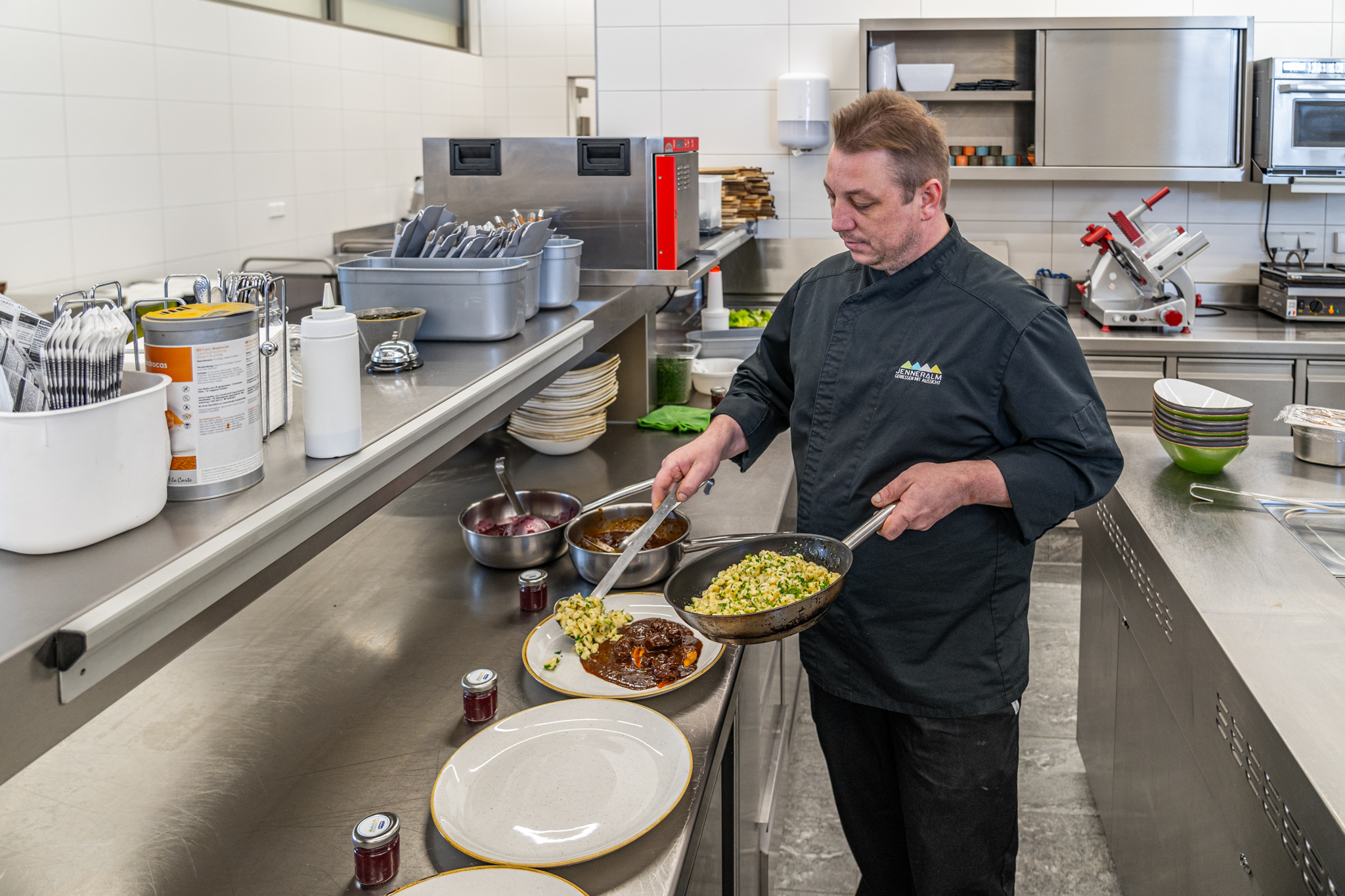
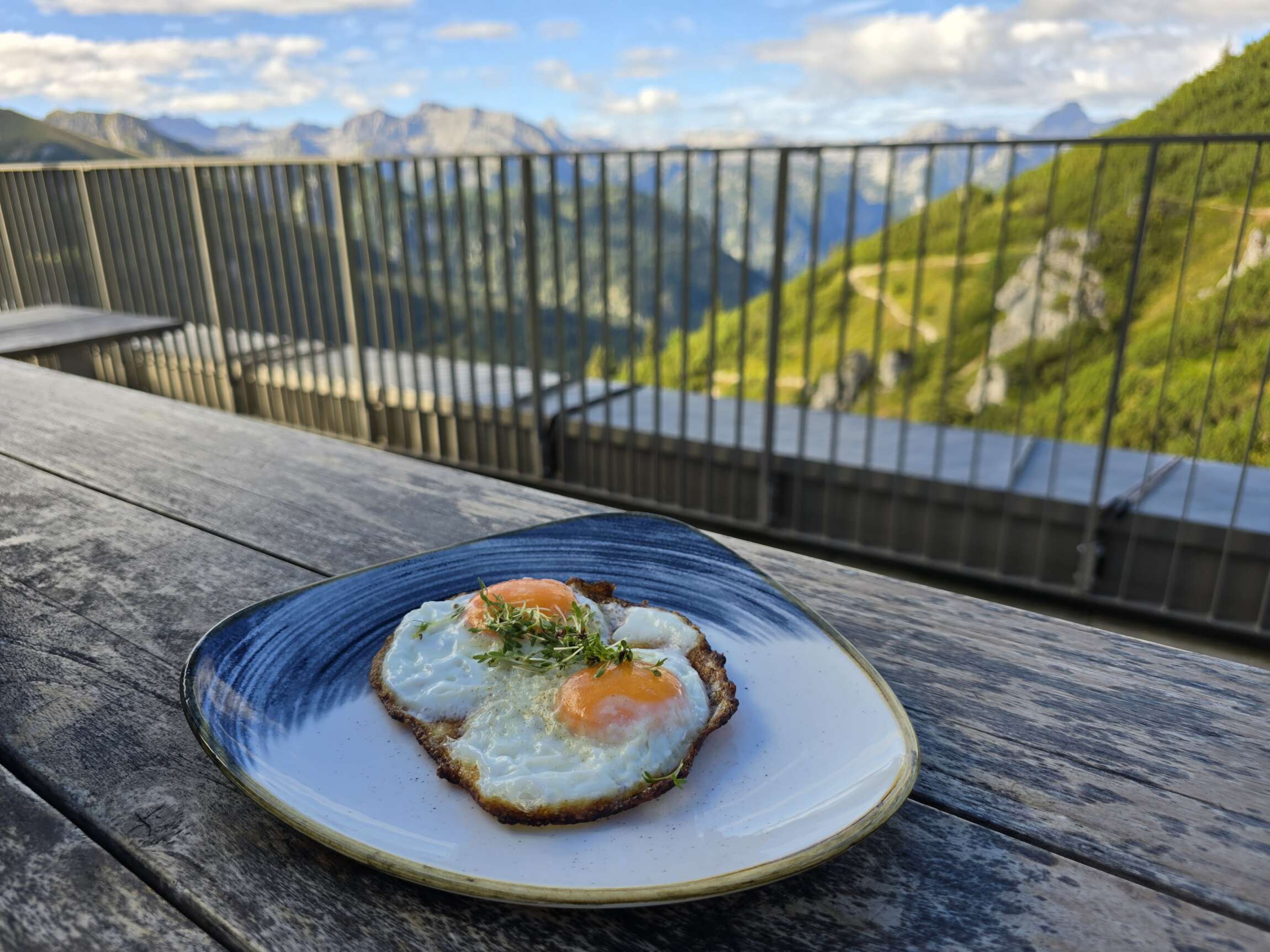
When Josef Meneder, head chef at Jenneralm, welcomes his first guests each morning, the breakfast eggs have only travelled a short distance from Garching an der Alz to Schönau am Königssee. The Jenneralm team uses around 1,000 eggs per week – for golden scrambled eggs for breakfast, homemade spaetzle and tempting desserts.
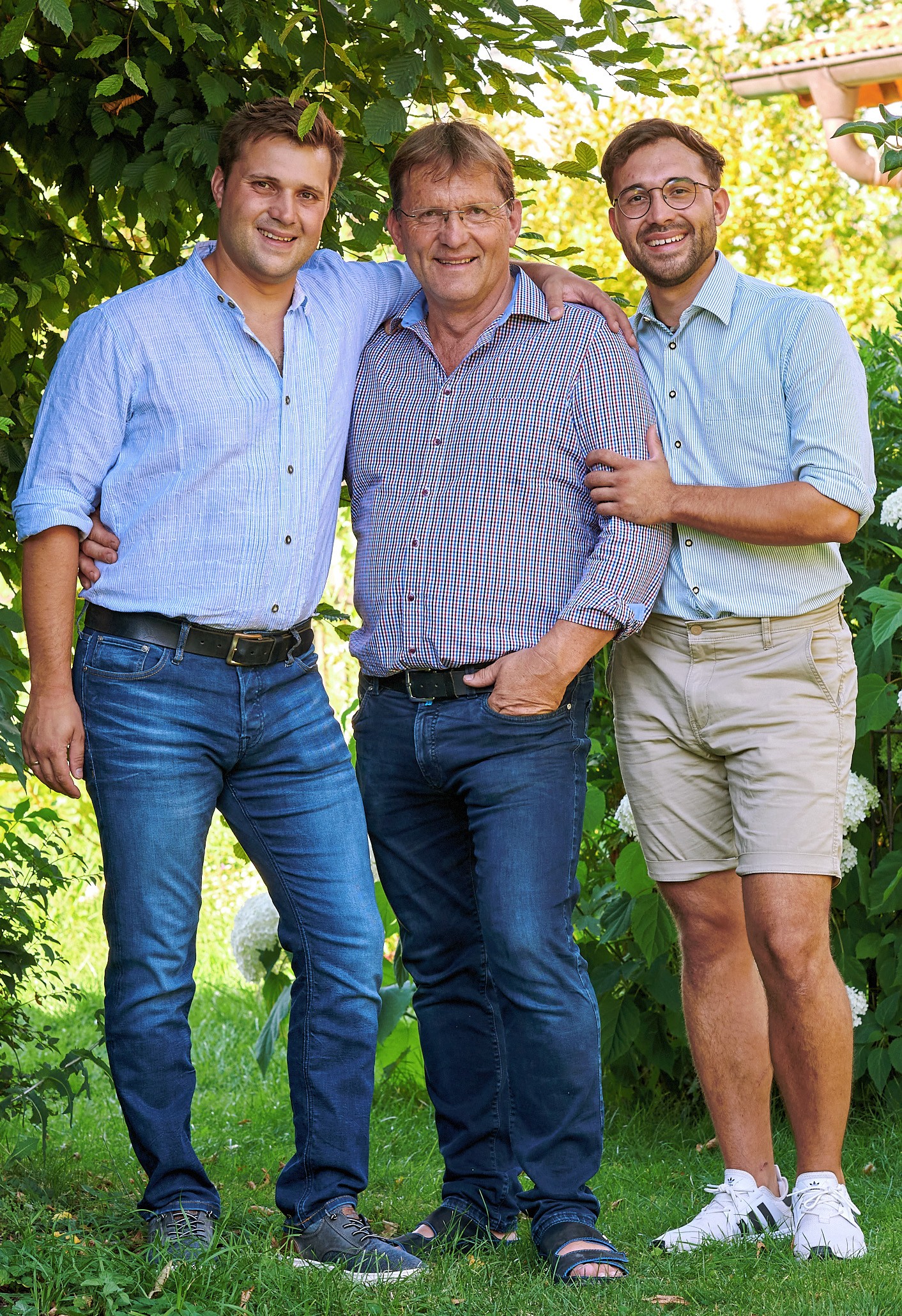
Since 1960, everything at the Mühlhauser Hof farm in neighbouring Chiemgau has revolved around chickens. What began as a small chicken farm has been expanded by the senior partner and his two sons into an impressive family business. Matthias, 31 years old and a master farmer, knew even as a child: ‘I want to be a farmer.’ Today, he takes care of conventional production, while his younger brother Bernhard, 29, manages the organic farm.
On 150 hectares of farmland, the family not only produces eggs, but also the feed for their feathered protégés. Matthias not only tinkers with the perfect chicken farming, but also optimises arable farming at the same time. A science in itself.
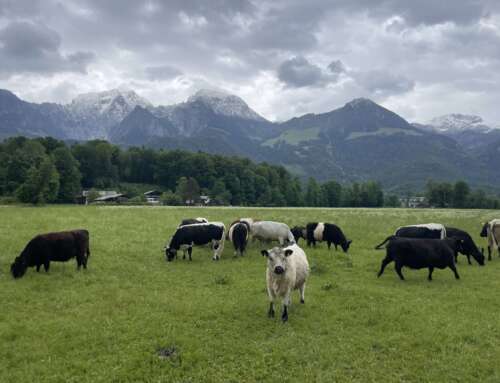
However, the real stars of the Mühlhauser Hof are the brown chickens of the Lohmann Brown breed. These robust animals are perfect for free-range farming and spend every day exploring the farm’s extensive meadows. Each chicken has at least four square metres of outdoor space, but the generous free-range area gives them much more room to scratch and peck.
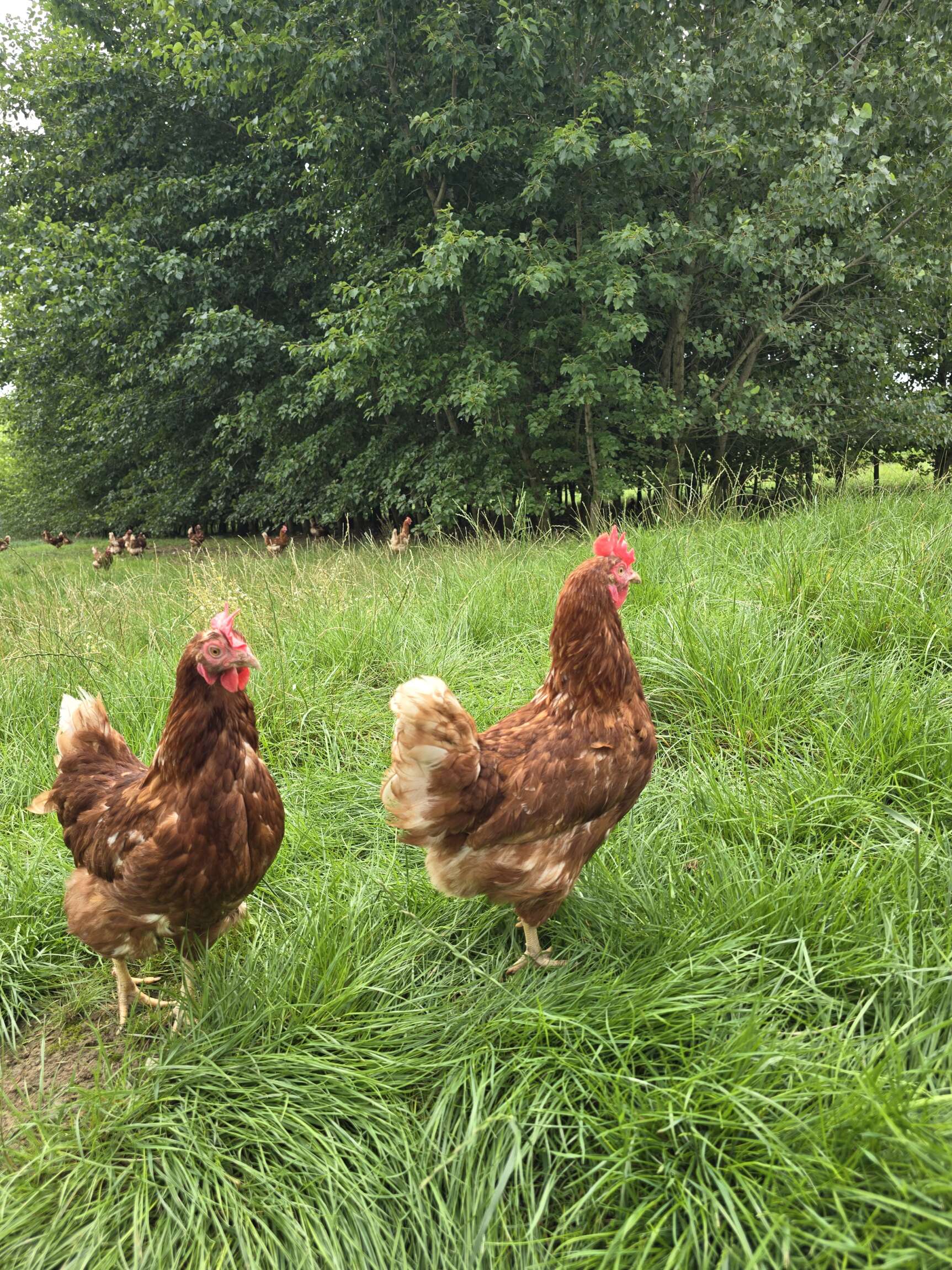
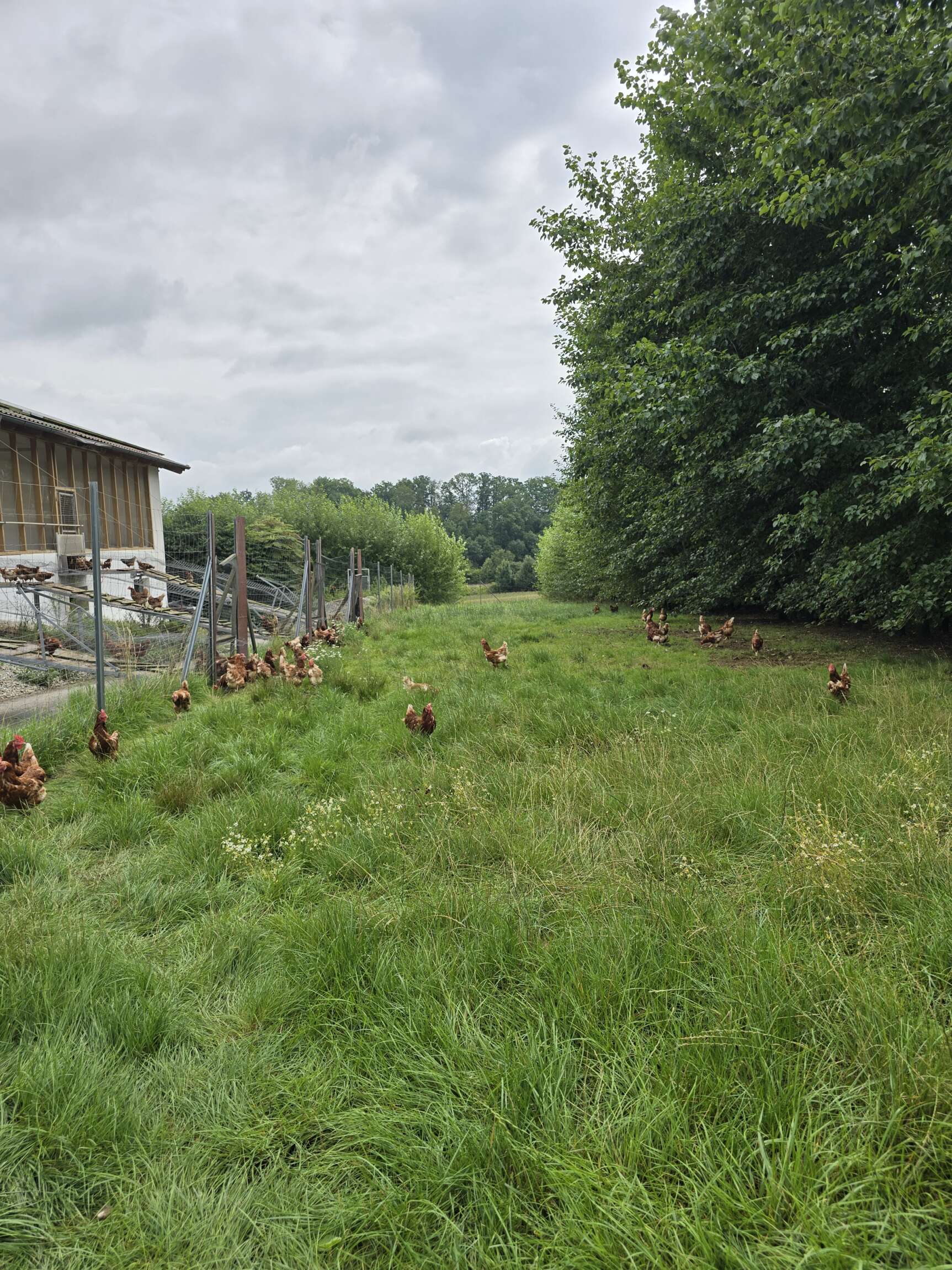
And they scratch with passion: each chicken moves the soil no less than 15,000 times a day in search of grains, worms and other delicacies. The dense poplar avenue in the middle of the meadows serves as a natural shelter – against rain, sun and enemies from the air.
‘Birds of prey are rarely a problem when the chickens are in a group,’ explains Matthias. ‘The fox, however, still manages to get through despite the fence.’
The Mühlhausers are particularly proud of their ‘winter garden’, a covered outdoor area that they affectionately refer to as the ‘wellness area’. Here, the chickens can stay outside even in wet weather, and they love to take advantage of this opportunity.
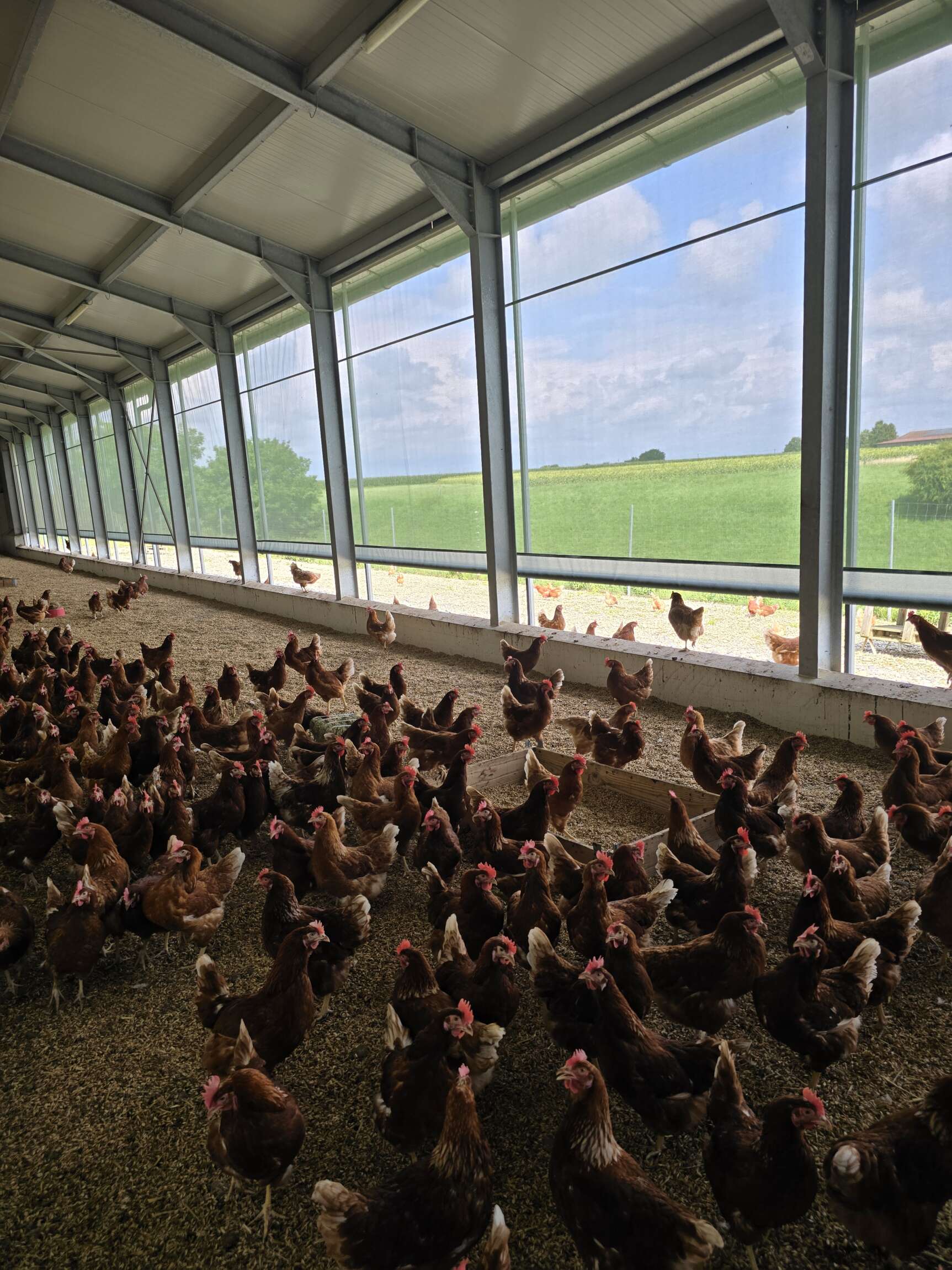
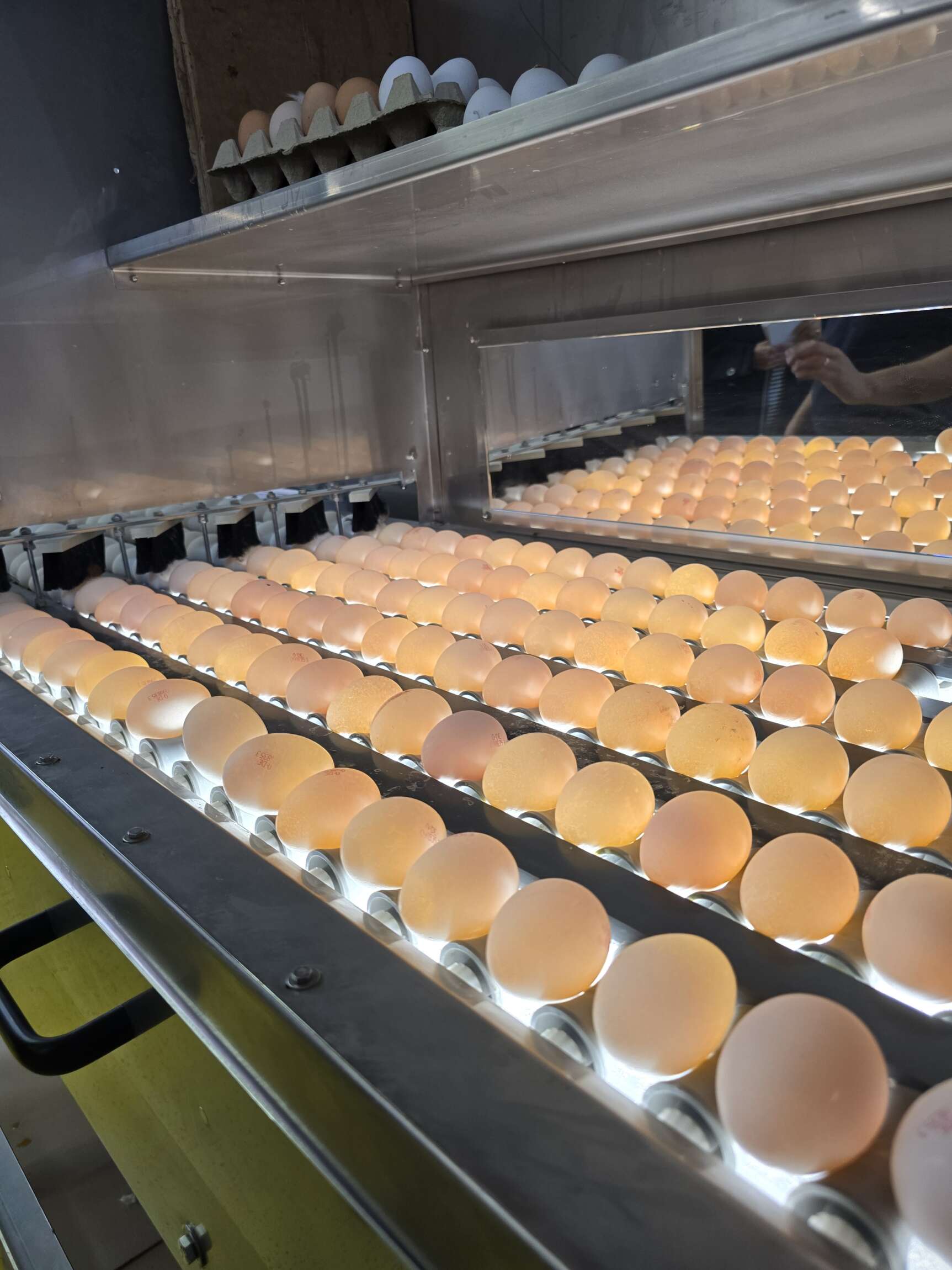
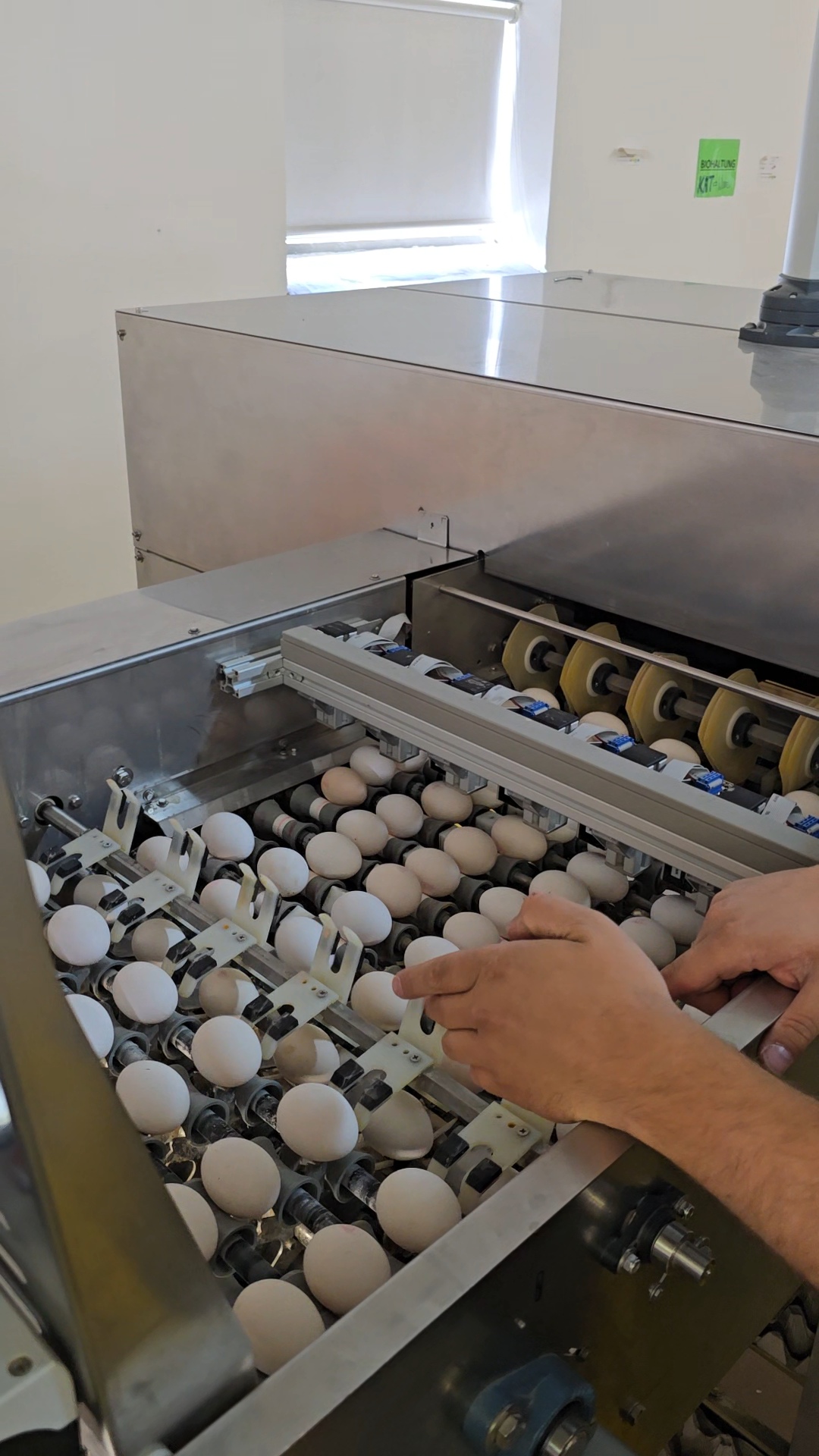
Once the hens have laid their eggs in the prepared laying nests, these are transported on an automatic conveyor belt to the hall, where they are X-rayed, weighed and sorted.
Damaged specimens are removed by hand – an impressive combination of technology and craftsmanship.
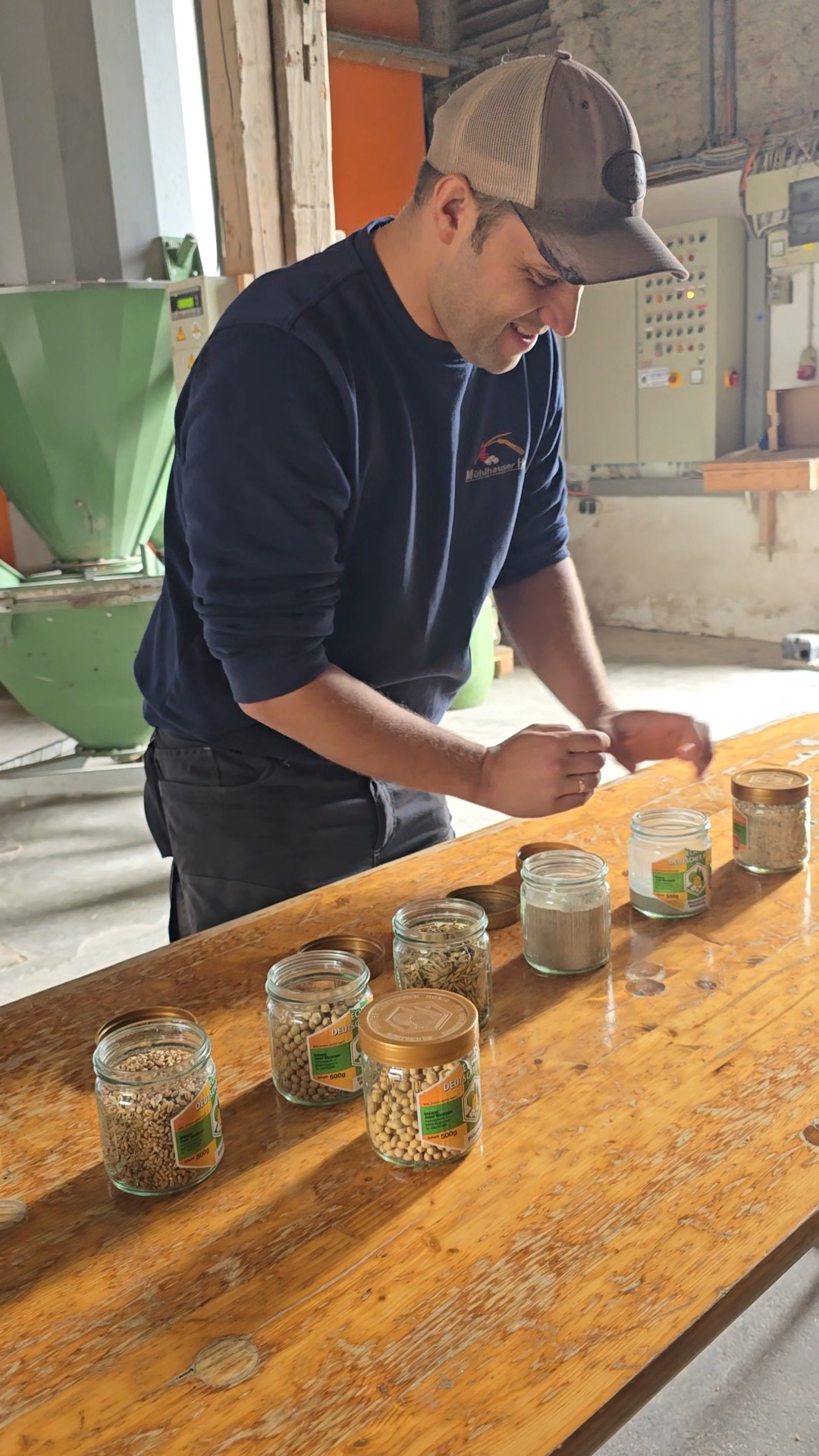
What makes a good egg is determined by the feed. The Mühlhausers have developed their own computer-controlled mixture, which is freshly prepared every day. Roasted soybeans – only roasted are they digestible for chickens – corn for the intense yellow yolk colour, various grains such as wheat and oats. Minerals and calcium ensure optimal feed conversion. The Mühlhausers have been growing their own soybeans since 2009. These are particularly important for the protein component in the feed.
A few kilometres away, Bernhard, a trained agricultural engineer, runs the family’s organic farm. ‘The cost of keeping organic chickens is significantly higher because organic farming for feed is demanding,’ he explains. Here, too, the family already produces its own feed on 30 hectares of organic farmland.
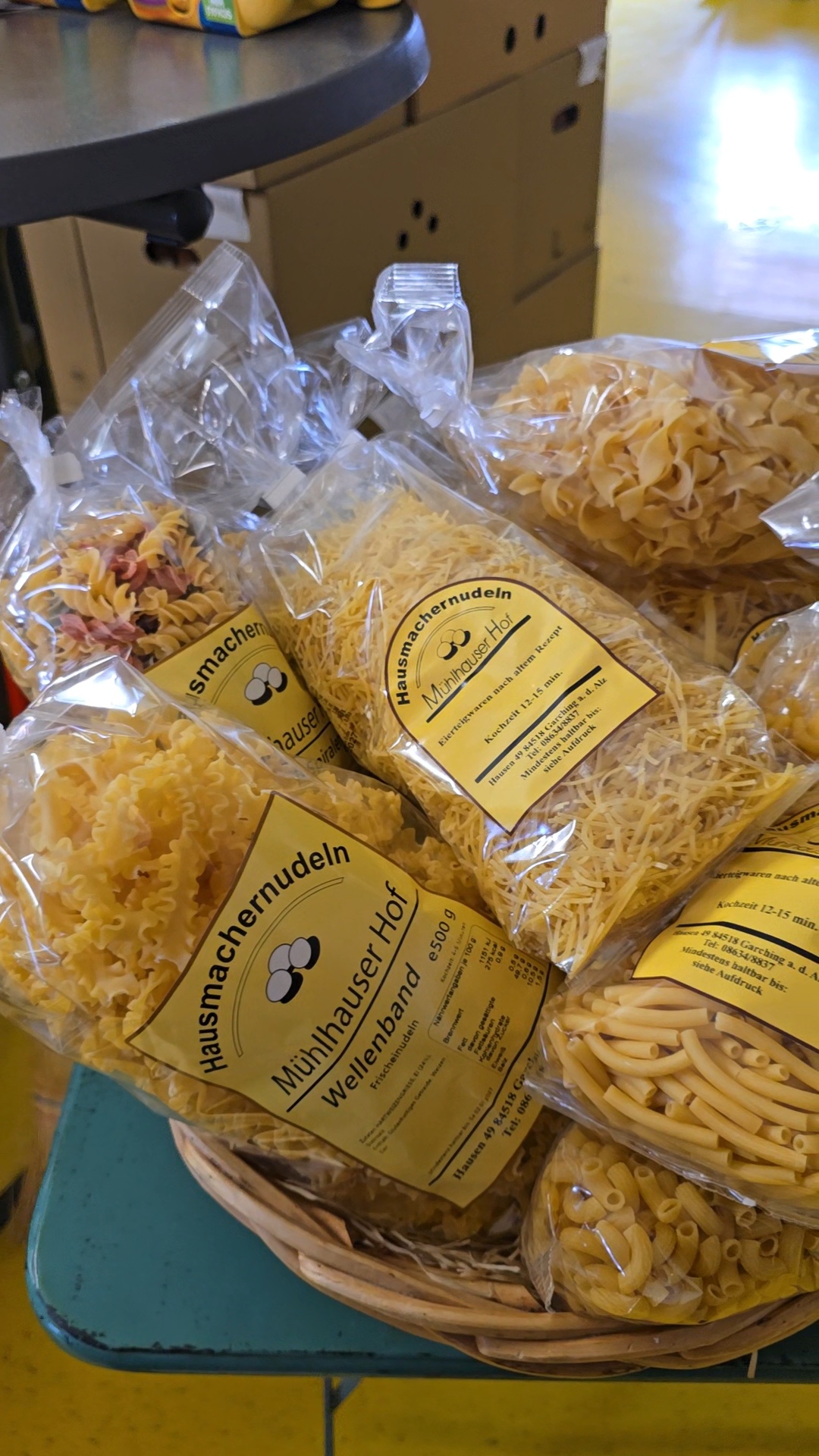
The Mühlhauser eggs go in three directions: most of them go to restaurants and hotels. Some end up in retail, and others are sold directly at local markets. There, the Mühlhausers also offer homemade pasta, which the Niedermayer bakery in Ramsau produces especially for them using their eggs.
The whole family pitches in at the farm, supported by one full-time employee, one apprentice and four part-time workers. Delivery is a matter for the boss – all with the aim of ensuring that fresh, high-quality eggs find their way to customers every day.